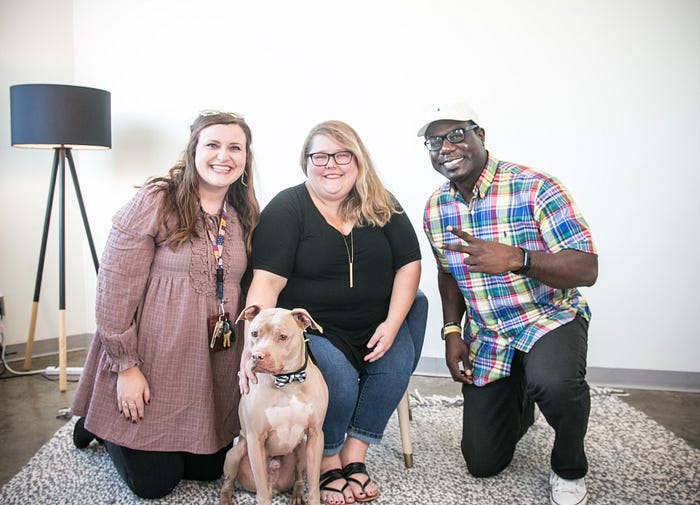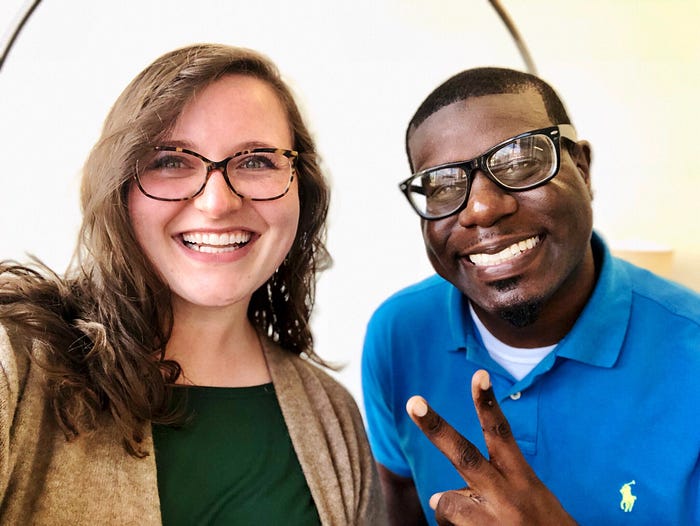
October’s Member Spotlight highlights Esther Davenport and Matthew Naylor of Hamilton County Mental Health Court. We sat down with them to talk about the state of mental health services in Chattanooga and how the community can get involved.
Luke: Talk to me about MHC’s mission. What do you guys set out to do on a day-to-day basis?
Esther: The Hamilton County Mental Health Court is an alternative sentencing program for justice-involved mental health consumers. So we work with basically mentally ill criminal offenders on the basis that their sentence — instead of prison — is going into our program to get mental health treatment. We work a lot with people who are homeless or unemployed — people who have experienced a lot of trauma. Our goal is to provide them with enough encompassing support that they don’t have to go back into the justice system — go back to some of those old habits and lifestyles. Ultimately we would love to see 100% reduced recidivism rate, but we understand that’s not part of recovery. In the justice system sometimes we do have people come back a couple of times into our program. Ultimately it’s just about getting them the treatment and support that they’ve probably never had before — most of our folks don’t have a supportive family or come from “good households;” they’ve grown up in a gang-affiliated area so they’ve seen and experienced a lot of violence. Substance abuse is a big thing with [our clients] — we see a lot of co-occurring disorders like bipolar and polysubstance. At the end of the day, we want to provide our participants with as much support and encouragement and treatment as possible, while also teaching them a different lifestyle.
L: So what does that look like on a day to day basis for you as a case manager, M?
Matthew: Through daily interactions on the phone and through home visits, you see the ins and outs of their lifestyles and family and social support, which a lot of them lack. So it’s just a lot of trying to get them back on track with life rather than turning to drugs and gangs — working with them on making better life choices to keep them out of jail and save taxpayers money. Having those interactions with them so that they know that we’re here to help them rather than them looking at us as someone that’s trying to put them into jail or discipline them.
L: What is the most gratifying part of your job and then what’s the most challenging part?
E: Most gratifying would definitely be working with our participants and really seeing them make progress, as well as gain self-esteem and understanding — you kind of get to see the light come back in their eyes as they realize a lot of different things about themself — and getting to watch their personal growth. On the flip side of that, we don’t have 100% graduation rate because relapse is part of recovery and for some people it’s just not the right phase of their life. Watching people leave a program that is meant to help them just because they wouldn’t take advantage of it is really difficult. And for me, I do the application and entry so I’m with them from the beginning to the end of [the process], so honestly the worst part isn’t even working with our participants, it’s working with other inmates at the prisons. Our participants are usually pretty fine, but the jail environment is definitely completely different — for a female to go there, it’s really intimidating but you’ve got to get used to that.
M: The most gratifying thing I can think of: we have Welcome Wednesdays in our program and that particular day is when I contact them and make sure that they have their meds for the time that they’re out until their next appointment at the provider that they’re going to at the time and make sure that they connect with their probation officer and their case manager and make sure that they are set up to succeed. The most difficult thing I can think of so far is sometimes is when I do drug tests with our participants and they’re not always honest, which I think is important in our program because like I said, we’re not trying to send them to jail, we’re just trying to get them treatment and connect them to services they may need. Through all that, you just have to try and be consistent and treat everyone equally.
E: And to add on to that too, it’s really hard with our participants because lying can be a survival mechanism for them which has gotten them through a lot of really traumatic situations in their life, probably starting from early childhood all the way until now. So you’re undoing bad habits that have roots that were seeded 20 or 30 years ago. So that’s definitely not fun but it is really rewarding whenever you can get past that hump if it comes to that.
L: How does doing your work here in Chattanooga differ from doing it in another city?
E: Even though we do have a lot and, for the most part this is a really progressive city, there are so many needs that people don’t see on a daily basis because they’re not involved in this population. We’re talking about a really large population in Chattanooga that is continually underserved. We have a ton of mental health providers in town but insurance is a big deal and without support from the state, our clients wouldn’t even be able to afford their medicine or make an appointment. Homelessness is a huge issue in this community and while the city of Chattanooga has picked up on that a lot, there’s not many missions for that. Transportation is another big one as well as housing. We’ve got so many people that can’t find housing that’s affordable for them. Most of our folks are on disability or SSI benefits — so around $725/month — and housing in Chattanooga, if you want to live in a place where you don’t feel endangered, you have to have at least $700-$800 a month, and then money to be able to live too. So those are some big issues and reentries really struggle with employment and reintegrating them into society, and when that happens they’re just going back to the same place they were without getting any extra support or any guidance on where to go. There are several initiatives working on that but for now Chattanooga is really behind in terms of what it can offer in the way of resources comparatively speaking. Right now, we can’t put our homeless clients in a house at all. [Laughing] Unless it came out of our own personal budget!
M: We want to do as much as we can to help the individuals that are homeless but sometimes, like E said, there’s a lack of resources available — especially income and insurance — and at that point there’s only so much that you can do to encourage them to keep going and not give up. It’s really lack of resources that is the most difficult thing for individuals to adjust to once they get out.
L: So with that in mind, what in you guys’ opinion is the best way for people in Chattanooga to help — either from a monetary or volunteer standpoint?
M: With this job that E and I have, it takes someone really wanting to make a change and transform lives for individuals who may not have a good background; really having a heart for these individuals and trying to give them the best treatment that we can. So from an outside perspective, funding is always good, donations help.
E: There’s always a need for more funding for individuals who work in social work. One of the biggest things that I see from a relational standpoint with our participants — it would be awesome if we could have people from our community help volunteer, not even to provide them with anything other than just a friend or a mentor or maybe even adopt them into their family, so to speak. I think one of the biggest downfalls is that after they do graduate from our program, they’re not required to report to us even though a lot of them want to. So they go back to “home” and home is not a good place for them, so then they end up back in the same spot as where they were before — not taking their medicine, not going to appointments, getting back into drugs to self-medicate or cope and end up back in the criminal justice system. So we can hand-hold to a certain extent, but there could be ways where our community could step up across Chattanooga and really engage with some of these people because it’s otherwise a really isolated community. I think reminding people in Chattanooga that the people in these outside communities that we deal with are struggling — and a lot of them are struggling with the same things that people within our day-to-day communities do, they just weren’t lucky enough to have the different socio-economic standing that we did, and otherwise they might be in the same place.
L: What would be the “official” way that Chattanoogans could get into those kind of person-to-person help systems with people in your program?
E: There are a lot of different ways you can get involved with “our” population without having to be involved with us specifically. There’s the homeless community kitchen, rescue mission where you can volunteer. There are AA meetings all across Chattanooga and they’re always looking for people to volunteer. We just had an event called The Unity Bridge on the Walnut Street Bridge, where recovering addicts, current addicts, and just community members who care came and held hands across the Walnut Street Bridge. Raising awareness is really the best way to start, and from there you find people who are really passionate about these things and try to figure out where to plug them in.
M: Mentors are very important because with a lot of individuals they lack that main support of someone who checks on them throughout the week. If that support is there — someone to encourage them and motivate them and keep inspiring them — they start to realize that they have potential to make their situation better than it was before.
E: And in terms of spreading awareness, a lot of people in Chattanooga don’t know that we have social media channels — Twitter, Facebook- where we post stuff that we’re doing in the community that people can get involved in.
L: How do you feel like SOW and the environment that you’re in here helped you guys in your work at MHC?
E: I mean I love it here. I actually toured this building when I was interning with the city of Chattanooga and that’s how I found it and from there I told my supervisor about it and then we ended up here with MHC. I like the lighting, it’s a very therapeutic environment here and even though it’s a modern setting it really feels like a very relaxed space. If we were in an office downtown, we’d probably not have nearly the amount of natural light that we have and there’d be lots of fluorescent lighting, but working here has created a much better environment and we’ve even been able to afford staying here for a while and even opening a second office here that we use as a therapy room. As far as a community, it’s really nice to be on a floor with people who don’t do what we do because it kind of reminds us that there’s more during the day. Sometimes you can get kind of consumed in our work especially if it’s been a rough week and so it’s been really nice to meet different people and have the ability to socialize and network with a lot of great people through things like the [SOW] member luncheons. Everybody’s friendly and it’s just a good work environment.
M: The roof is really nice for getting a breather too and that’s something that I never had at any previous place that I worked at. This environment here is just really friendly and everybody will talk to you and engage with you. There’s a lot to be thankful for, working in this space.
E: Our director was looking for a space for us around the time that I came on and when I described the natural light she wanted to see it. It’s in the perfect space for us, being so near to a lot of our clients from the community kitchen and Patten Towers and within walking distance of the courthouse and all of that.
L: What’s been your favorite experience in SOW so far?
M: Recently we had “Christmas in July” and rented out the 6th floor conference room and had our interns set up the decorations for us and the participants got to come around and take part in it and the ones that showed up were really thankful for what we had there, so that was a good experience to see them come in and see the gratitude for what we were able to provide for them.
E: [Laughing] Honestly I just really love playing with everyone’s dogs when they bring them into the office. For some reason they always seem to gravitate back to my office and I just get to hang out with someone’s dog. I’ve never worked in an animal-friendly environment so that’s just been so fun. We also did a surprise intern goodbye party and it was hilarious having all of the police officers, both of our judges — our DA hid under the table and popped out to surprise them — I think overall that’s one of my favorite memories here so far and we couldn’t have done that type of thing at a typical office.